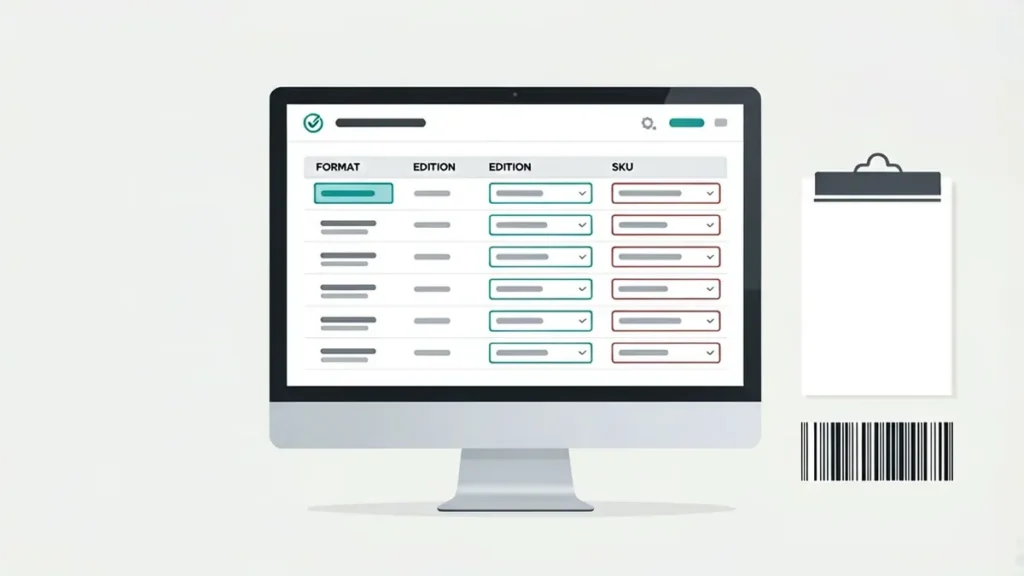
SKU means stock keeping unit. In a Rovqila catalogue record, it is an internal reference used to distinguish one listed product record from another. It is useful when a name is shortened, several variants look similar, or you need to point the editorial or support team to one exact record. A SKU is a catalogue identifier, not a health, strength, origin or suitability statement.
Why the SKU matters
Product names can contain several descriptive parts, such as a brand, colour word, edition, format, flavour wording or sale unit. Two records may share some of those words while still being separate listings. The SKU gives you one more field to check alongside the complete title and the page URL.
For example, the live catalogue includes different product records with different names and reference codes. The reliable approach is to treat the title, SKU, sale unit and URL as one record. Do not identify a listing from a partial name, a colour word or an image alone.
How to check a SKU on a product record
- Open the exact product page from the Rovqila Exact Product Directory or the relevant catalogue category.
- Read the full product title, including any edition, format, size wording and carton or pack description shown on that page.
- Locate the SKU field and copy it exactly, including letters, numbers and hyphens.
- Compare the SKU with the final page URL and the sale-unit wording. A matching code does not make a different page or a different sale unit the same record.
- Before ordering, recheck the current page fields because catalogue availability and displayed amounts can change.
SKU, product name and URL are different fields
The product name is the customer-facing title. The SKU is the catalogue reference. The URL is the web address for the record. They support different checks and should not be substituted for one another.
A product name may be edited for clarity while the SKU remains the reference used to distinguish the record. A URL may also be different from the wording in the title. When you contact Rovqila about a listing, provide the full title, SKU and URL together where possible. This reduces ambiguity without requiring you to infer details that are not stated on the live page.
What a SKU does not tell you
A SKU by itself does not prove that a product is suitable for you, available at a particular price, manufactured in a particular country, or covered by a particular legal rule. It also does not replace the product description, current stock indicator, sale-unit wording or the site’s adult-only purchasing requirements. Avoid treating a number or letter sequence as a quality, safety or health claim.
For a broader explanation of catalogue wording, see How to Read Hard Pack and Box Labels in a Cigarette Catalogue and the guide to the 1 carton (10 packs) label. These guides explain why one field should be read with the rest of the live record.
Before you ask for support
For an adult Australian customer checking a product record, keep the full title, SKU, product URL and the relevant order reference together. Do not send card numbers, passwords or unrelated identity documents through a support message. Use the Rovqila contact page for a product-record question, and review the Terms and Conditions before placing an order.
Quick answer
SKU means stock keeping unit. In the Rovqila catalogue, use it as an exact record reference and verify it against the complete product title, sale unit and final URL. Check the live page again before relying on time-sensitive stock or amount fields. This information is for adults 18+ and does not make health, safety or cessation claims.